Within the demanding world of modern serious sliding, podium finishes is not merely solely a result of raw horsepower or pilot bravado. Rather, it has become a complex discipline which requires a meticulous fusion of picking a time-tested chassis, outfitting it with the most precise competition components, and, most essentially, grasping its live behavior on the course through sophisticated vehicle dynamics analysis tools. This definitive handbook functions as your master plan starting from the initial concept of a competition vehicle right through to the last engineering-refined adjustments that turn a strong vehicle into a predictable winner. We will delve deep into the precise engineering of car suspension tuning, illustrating how a state-of-the-art drift tuning app like precise measurement hardware removes assumptions and offers exceptional clarity into your car's true performance.
The bedrock of any exceptional competitive sliding vehicle is, undoubtedly, the chassis itself. Certain cars have earned renowned status within the global sliding community due to their built-in handling characteristics, durable design, and the vast range of specialist parts available. Selecting the correct car is the primary and most significant selection a driver will make. To illustrate, the BMW E36 is commonly accepted as perhaps the the greatest balanced cars for drifting of all time. Its near-perfect 50/50 weight distribution, alongside a rear-wheel-drive layout and robust inline-six engines, establishes a platform that is at once easy to handle for newcomers and incredibly capable in the possession of a expert competitor. The next step of this philosophy, the BMW E46 platform, improves on these attributes with a increasingly developed frame, increased wheel track for improved stability, and still increased lock directly from the OEM. Another formidable platform in the pro scene is the Corvette C6.
This muscle-derived performance car offers a unique array of benefits to the sideways world, including a light aluminum structure, a backwards-positioned drivetrain component that aids in an excellent weight distribution, and the colossal torque of a large-displacement LS V8 motor. This combination transforms it into an absolute monster on track, able of starting and holding extended angles with relatively minimal use of acceleration. For those seeking remarkable value, the Nissan 350Z excels as a top-tier example. It arrives from the manufacturer with a rigid chassis, a effective original LSD, and the smooth VQ35DE motor that provides sufficient performance for mastering and advancing in the sport. Its successor, the Nissan Z34, offers additional advancements in chassis stiffness, steering geometry, and peak powerplant performance, solidifying its place as a popular pick among professional pilots. Other iconic vehicles that merit mention encompass the nimble Wankel-engined FC generation RX-7, the ever-present Nissan S13, the V8-powered SN95 generation Mustang, the modern BMW E90, and the small yet unbelievably fun and teachable Mazda Miata. All of these chassis provides a distinct array of traits, difficulties, and potentials, but they all share the core elements essential to become a serious drift machine.
However, choosing the correct car is merely the beginning. To access the complete potential of every of these cars, substantial modifications to the steering system and chassis control systems are absolutely essential. This is where the domain of specialist drift-spec parts enters sharp view. The most most impactful modification for a dedicated drift car is the installation of a maximum-angle drift angle kit. These engineered kits, such as those developed by industry leaders like SLR Speed, are engineered to dramatically enhance the vehicle's maximum turning lock. A OEM road car is highly constrained in how far its tires can pivot, a engineering trade-off for public road use. In drifting, however, aggressive steering input is continuously necessary to catch and sustain a angle. An steering kit substitutes the stock uprights, tie rods, and potentially A-arms with parts that allow the steered wheels to reach angles over 70 or even 80 °, versus a typical OEM limit of around 40 to 50 degrees.
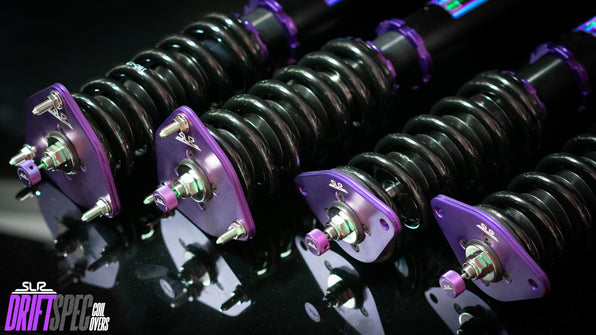
This vastly greater lock provides the operator with exponentially enhanced authority during a slide, making it far simpler to initiate a oversteer moment, hold it through a extended corner, and change smoothly from one direction to the opposite. The contrast in drivability is nothing short of revolutionary. Coupled with a properly selected modification is the equally critical upgrade to the chassis's spring and damper setup. Generic or including expensive road adjustable suspension are simply not designed for the unique and extreme requirements of sliding. A dedicated pair of adjustable dampers is paramount. These specific dampers feature custom damping rates and spring strength that are tuned for the rapid mass transition that is typical of aggressive driving. When a driver begins a slide, the vehicle's weight is shifted forcefully to the outside of the bend. Proper competition suspension handle this movement in a predictable fashion, enabling the vehicle to stabilize rapidly and offering the driver clear feedback through the controls and cockpit. They also enable accurate tuning of ride height, rebound and compression firmness, and weight balance, which are all fundamental parts of optimizing the vehicle's handling to a particular venue or piloting approach. Together, a top-tier angle modification system and a properly chosen set of drift-spec coilovers are the undeniable hardware base upon which all future tuning is built.
Once the essential components is fitted, the next critical step in the project is the detailed tuning of the car's wheel angles. This is the realm of vehicle alignment optimization, a process that can appear overwhelmingly complex to the uninitiated but is, in fact, the secret to converting a assembly of high-performance parts into a unified and controllable machine. The most discussed element of alignment for sliding is undoubtedly negative camber. Wheel camber is the inclination of the wheel compared to the vertical plane when looked at from the front-on of the car. When the upper part of the wheel is angled towards the chassis, this is called negative camber. For sliding, negative camber on the steering wheels is universally used and is seen as necessary. The reason is deeply tied to physics.
When a car is turning at limit angles, the frame rolls towards the outer of the corner. This lean makes the outside steering tire to lose its ideal contact patch with the tarmac. By introducing inward lean, the wheel is pre-leaned to counteract this lean. As the car leans into the corner, the tire gains a better contact patch with the asphalt, maximizing its grip at the precise time when it is absolutely essential for directional command. Typically, front adjustments for a serious sliding vehicle range from approximately -3 degrees to as high as -5 degrees or even greater, based on the specifics of the vehicle configuration, tire selection, and operator feel. The rear wheels also utilize inward lean, but the angles are usually less and less aggressive than the front axle. Too much inward lean at the back can result in the chassis extremely prone to oversteer and difficult to control on throttle use, as it diminishes the available tire footprint of the powered wheels during forward throttle application. Therefore, rear axle camber settings are frequently in the range of -1 degree to -3 degrees, striking a careful balance between giving enough lateral grip to assist in initiating and holding the slide while simultaneously keeping usable traction for power-down the turn. alignment is just one component of the more complex tuning picture, which furthermore includes toe, caster angle, and suspension-induced steering modification.
Toe angle describes the angle of the wheels when viewed from the top. Inward toe means the front edges of the wheels are closer together than the trailing edges, while outward toe means the opposite. For sliding, a slight amount of front toe out is frequently employed to quicken the initial directional feel, making the vehicle feel more nimble and willing to start a drift. Rear toe is usually set to zero or a very small amount of toe-in to encourage predictability under power. Caster is the forward or rearward inclination of the steering axis when looked at from the side-on of the chassis. Positive caster angle improves feedback and high-speed confidence, and it drift telemetry software additionally boosts inward lean gain during drift telemetry software cornering, which is extremely useful. Tuning these parameters is a complex interaction where a change to a single value can and will impact the remaining parameters. The traditional method for tuning a vehicle's suspension geometry for drifting has for a long time been a time-consuming endeavor of guesswork and adjustment. A driver or crew would introduce a modification based on experience, test the chassis on track, depend on the operator's personal perception and comments, and then introduce another tweak. This cycle would repeat again and again until the chassis felt "good" or the available practice time ended. This methodology is not only incredibly inefficient in terms of man-hours and resources, but it is also inherently inaccurate.
Human feel is a notoriously inconsistent metric, colored by countless factors such as tiredness, varying track surfaces, ambient heat, and just the mood of the driver on that given session. What feels "oversteery" on one pass might feel "tight" on the next run, causing confusing data and frustrating changes. This traditional limitation in vehicle dynamics optimization is specifically where state-of-the-art engineering tools has made its mark to transform the landscape.
The advent and integration of specialized suspension tuning applications has introduced a new era for building and optimizing professional drift cars. These tools, represented by innovative solutions like modern telemetry hardware, work by actively recording the actual physical movement of the car as it is piloted on the track. Unlike relying on personal feedback, these devices gather measurable information on essential factors such as damper compression and extension, wheel speed, G-force loading, steering angle, and accelerator and brake pedal position. This raw telemetry is then processed by advanced applications that can graph and decode the information in a clear format. For the first time, drivers and builders can observe specifically what the vehicle is exhibiting at every millisecond of a drift. This capability revolutionizes the entire alignment optimization workflow. Think about the aforementioned goal of dialing in the front negative camber for a specific chassis. Instead of applying a adjustment from -3 degrees to -3.5 degrees and then driving several runs to try and "sense" a improvement, a suspension tuning tool can deliver immediate and definitive data. The software can show in a chart how the wheel's contact patch is performing during the key stages of a drift: turn-in, mid-corner, and switch. It can demonstrate if the current angle is permitting the steering tire to achieve ideal contact or if the compound is working inefficiently on its external shoulder.
The system can then make empirical recommendations for change. Perhaps the telemetry indicates that the tire is still overloading its outer shoulder at -3.5 degrees of negative camber, indicating that even more negative camber, say -4 degrees, might be warranted. Alternatively, the information might indicate that the tire is not achieving optimal operating temp or that the inner edge is wearing excessively, which could point to that there is overly aggressive inward lean and a slight lessening back to -3.2 degrees would be better ideal. This degree of precision and practical insight was simply impossible in the era of exclusively manual tuning.
The benefit of utilizing a dedicated vehicle dynamics tool extends well beyond merely setting alignment. It becomes an invaluable coilover setup tips that is tailored to your exact car. When adjusting the rebound and compression values on your suspension, instead of relying on imprecise advice or mimicking another driver's settings, you can employ the data to analyze how the chassis is reacting in relation to your tweaks. The tool can graph the damper movement trace over a section of track, revealing if the coilovers are handling the body movement effectively or if they are permitting the car to become unsettled uncontrollably after a flick. It can aid in diagnosing problems like hitting the bump stops or topping out, allowing you to apply data-backed decisions to preload settings, rebound/compression settings, or stance. This approach translates similarly to the detailed task of suspension geometry optimization. Beyond camber, the software can offer insight into how changes to toe and caster angle are affecting the vehicle's stability during different phases of a lap. For example, it can assist you to ascertain the best amount of front axle toe-out for your particular steering geometry and competition technique by analyzing the quickness of initial reaction and the predictability of the chassis at lock countersteer. This makes the software an incredibly powerful performance optimization handbook that is actively calibrated by the live behavior of your specific vehicle on the tarmac. It elevates the whole endeavor from a subjective skill into a methodical engineering process.
Moreover, the application of a platform like data acquisition is not limited to experienced tuners with large funding. For the club-level driver, it serves as an amazing educational tool. It in essence gives the driver with the insight of a full-time suspension specialist without requiring the associated cost. It speeds up the development time by giving definitive answers to challenges that would traditionally take seasons of trial and error to understand. A builder can see how their particular vehicle reacts to different adjustments, building a deeper understanding of car control in the endeavor. It also democratizes advanced suspension engineering principles, allowing every enthusiast with the desire to optimize their vehicle to achieve it in a efficient and effective manner. This is particularly important in a discipline like sliding, where setup expertise has historically been a closely guarded commodity among top teams. Now, that power can be in the toolkit of every dedicated builder.
In conclusion, the journey to building and tuning the ultimate championship-contending drift machine is a multi-faceted project that perfectly combines proven engineering knowledge with 21st-century data tools. It begins with the strategic selection of a legendary car, then built upon the application of non-negotiable competition hardware like high-performance angle modification systems and expertly specified drift-spec drift tuning app coilovers. The build then progresses into the intricate phase of alignment optimization, where parameters like negative camber, toe setting, and caster angle are meticulously set to suit the car's modified geometry and the pilot's individual style. Finally, and what truly differentiates the today's process from the old ways, is the adoption of a sophisticated suspension tuning application. This system eliminates the approximation and waste of purely seat-of-the-pants setup by delivering quantifiable, live telemetry on how the chassis is truly performing. It functions as an unparalleled suspension tuning tool, a actionable coilover setup manual, and a all-in-one performance analyzer. Together, this complete approach ensures that all element of the competition vehicle—from the selection of the car to the most minute adjustment on the damper—is perfected for maximum competitiveness on the circuit. It embodies the complete evolution of the discipline of drifting, connecting raw pilot talent with data-informed suspension engineering to create the ultimate effective vehicles attainable.